Free, tip what you liked · ★ 8.8/10 (3,411 reviews) · on Civitatis
Quick answer
Yes. There are 4 free walking tours in Rio de Janeiro listed here, bookable for free on Civitatis. The most reviewed is Rio's Historic Center Free Walking Tour: it meets at Municipal Theater of Rio de Janeiro, lasts about 2h45 and is guided in English, rated 8.8/10 from 3,411 reviews.
Start times vary by date and are confirmed when you book.
Rio de Janeiro rewards walkers with more layers of history than any single view of the bay can capture: a 16th-century Portuguese outpost that became, for over a decade, the seat of an empire when the Portuguese royal family fled Napoleon's armies in 1808, then the capital of Brazil itself until 1960. A free walking tour is the fastest way to read that story in the buildings still standing between Cinelândia and the old docks.
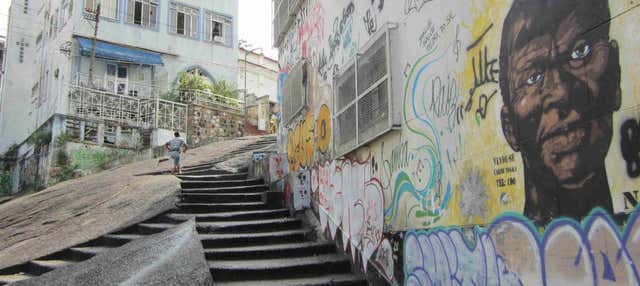
Start with the classic route through the historic center, where Belle Époque theatres and colonial churches sit a few blocks from the samba circles of Pedra do Sal, then ride the yellow bondinho up to Santa Teresa's cobbled lanes, or count the tiles — from more than 60 countries — on the Escadaria Selarón. Local guides will point out which corners still carry the accent of carioca daily life, far from the postcard of Christ the Redeemer watching over it all.
Plan your visit to Rio de Janeiro
Top things to do in Rio de Janeiro
Rio's skyline is unmistakable, and two icons anchor it: Christ the Redeemer, reached by cog train up Corcovado mountain, and Sugarloaf Mountain (Pão de Açúcar), where a two-stage cable car climbs to a 360-degree view over Guanabara Bay. Both are worth the half-day each takes, ideally on a clear morning before the clouds roll in.
Beyond the postcards, the free walking tours cover the ground-level Rio that the cable cars fly over: the colonial streets of the historic center around Cinelândia, the mosaic-covered Escadaria Selarón linking Lapa and Santa Teresa, and the birthplace of samba at Pedra do Sal. Save an afternoon for a stroll along Copacabana or Ipanema beach, if only to watch a Rio sunset the way locals do.
Neighborhoods and where to eat
Centro is Rio's colonial and business heart, busy on weekdays and quiet at night; Lapa, just beside it, wakes up after dark under its landmark aqueduct arches, with samba and forró spilling out of bars until sunrise. Santa Teresa, reached by the historic tram, keeps a village pace of artists' studios and hillside views, while Copacabana and Ipanema string beach life along the coast, and the Saúde district preserves the memory of Little Africa near the old port.
Eat your way through a feijoada lunch on a Saturday — the black bean and pork stew that's practically a national ritual — and snack on pão de queijo or a cold açaí na tigela between stops. In the evening, a boteco (neighborhood bar) serving ice-cold beer and petiscos is where cariocas actually unwind, and a caipirinha at sunset is close to mandatory.
Getting around and best time to visit
Rio's metro covers two lines that connect Centro to Copacabana and Ipanema, and it's the safest, fastest way to move between the South Zone beaches and downtown; the free VLT tram links the historic center on the surface, and ride-hailing apps are widely used for late-night trips. Central neighborhoods and beachfront areas are easy to explore on foot by day; stick to well-lit, busy streets after dark, the same common-sense rule that applies in any big city.
Rio is tropical and warm year-round, but the sweet spots are autumn (April–June) and spring (September–November), when temperatures ease off and the crowds thin out. December to March brings peak heat, the rainy season and Carnival, Rio's biggest party and its most crowded, priciest weeks. Whenever you visit, free walking tours run rain or shine, so pack light layers, sunscreen and comfortable shoes for cobblestones and hills.
Good to know before you go
Rio's sun is intense year-round — wear sunscreen and a hat, and carry water, especially on tours that climb toward Santa Teresa or spend hours outdoors.
Leave valuables and flashy jewelry at the hotel, and carry only what you need for the day; it's the same common-sense advice locals themselves follow in busy areas.
Pair a morning historic-center tour with an afternoon ride on the Santa Teresa tram, or time the Pedra do Sal tour for early evening, when the neighborhood's samba circles start warming up.
Rest those walking legs
Where to stay in Rio de Janeiro
Well-reviewed stays from our partner Booking.com. Check rates and availability for your dates on their site.
Yes. There is no ticket and no upfront cost — you reserve a spot, show up and enjoy the tour. At the end you tip your guide whatever you feel the experience was worth. Most travelers tip the equivalent of €10–20 per person, but it is entirely up to you.
Where do free tours in Rio usually start?
Most historic-center tours meet at the Theatro Municipal in Cinelândia, while the Santa Teresa route starts at Largo dos Guimarães and the Afro-culture tour begins at Praça XV. The exact meeting point is always confirmed on each tour page and in your booking confirmation.
Do I need to book in advance?
Booking is free and strongly recommended — groups are capped so tours stay personal, and popular time slots fill up fast, especially in high season. You can cancel anytime at no cost.
Free tools to plan your trip
Work out the tip, find the best month, compare cities or see what’s nearest — all free.