Free, tip what you liked · ★ 9.5/10 (5,247 reviews) · on Civitatis
Quick answer
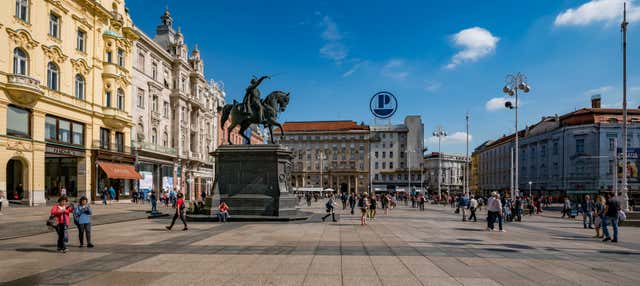
Yes. There are 2 free walking tours in Zagreb listed here, bookable for free on Civitatis. The most reviewed is Zagreb Free Tour: it meets at Trg bana Josipa Jelačića, lasts about 2h and is guided in English, rated 9.5/10 from 5,247 reviews.
Start times vary by date and are confirmed when you book.
Zagreb rewards a slow walk more than almost any other Croatian city, because it isn't one city but two, stacked side by side. Gornji Grad, the Upper Town, keeps its medieval street plan, red-tiled church roofs and quiet squares, while Donji Grad, the Lower Town, unfolds below in the wide avenues and green squares the Austro-Hungarians laid out. A free walking tour is the fastest way to link the two halves and understand how a market town on a hill became Croatia's capital.
Start with the classic route between Ban Jelačić Square and St Mark's Church, then come back for the things a guide can't fully cover in two hours: the espresso terraces of Tkalčićeva, the stalls of Dolac market at their liveliest before noon, and the oddly moving Museum of Broken Relationships tucked into the Upper Town's back streets.
Plan your visit to Zagreb
Top things to do in Zagreb
Start where most visitors do: Ban Jelačić Square, the city's living room, then climb into Gornji Grad (the Upper Town) to see St Mark's Church, its tiled roof laid out in the coats of arms of Zagreb and of Croatia, Dalmatia and Slavonia. A few steps away, the Lotrščak Tower still fires a cannon shot at noon, a ritual that's been running since the 19th century — ride the tiny funicular down rather than take the stairs, just to say you've done it.
Back at street level, wander Dolac market, spread out above Jelačić Square under its rows of red umbrellas, then walk to the twin neo-Gothic spires of Zagreb Cathedral before losing an hour or two in the strange, genuinely moving Museum of Broken Relationships, where breakup mementos from around the world get a permanent home.
Neighborhoods and where to eat
Gornji Grad (Upper Town) is Zagreb's postcard quarter — quiet cobbled lanes, government buildings and church spires, best explored slowly and mostly on foot, since cars are limited. Tkalčićeva, the street that traces a covered-over stream just downhill, is where the city goes for coffee by day and drinks by night; the Lower Town, Donji Grad, spreads out in a grid of parks and grand 19th-century buildings, with Zrinjevac park a favorite for a slow stroll.
For food, start at Dolac market for cheese, cured meats and produce sold straight from the villages around the city, then order štrukli wherever you see it on a menu — a baked or boiled pastry of cottage cheese that's Zagreb's signature comfort dish. Round it out with grilled meats, a glass of Croatian wine, and a coffee lingered over on a Tkalčićeva terrace, which is as much a local pastime as an activity.
Getting around and best time to visit
Central Zagreb is compact and walkable, with the Upper and Lower towns linked by the short, century-old funicular as well as plenty of stairs. Trams cover the rest of the city cheaply and run late; a single ticket bought from a kiosk or the driver covers 90 minutes of travel. The airport sits about 17 km south of downtown, with a shuttle bus timed to flights running into the main bus station.
Zagreb has a proper continental climate, unlike the Croatian coast: warm summers, cold winters, and its best weather in late spring (May–June) and early autumn (September–October), when days are mild and the outdoor cafés are at their best. Winter brings a well-loved Christmas market to the Upper Town squares, so it's worth visiting even in the cold if festive lights and mulled wine sound appealing. Free walking tours run year-round, rain or shine, so pack for whatever the season throws at you.
Good to know before you go
Zagreb has a proper continental climate — hot summers, cold winters — so check the forecast, not just what coastal Croatia is doing; the Upper Town's cobbled streets get slippery in rain or frost.
The Lotrščak Tower fires a cannon shot at exactly noon every day, a tradition dating back over a century; don't be startled if you're nearby, and consider timing your walk around it.
Dolac market runs mornings only and mostly in cash, so carry some (euros — Croatia adopted the euro in 2023) if you want to buy fruit, cheese or flowers like a local.
Rest those walking legs
Where to stay in Zagreb
Well-reviewed stays from our partner Booking.com. Check rates and availability for your dates on their site.
Yes. There's no ticket and no upfront cost — you reserve a spot, show up and enjoy the tour. At the end you tip your guide whatever you feel the experience was worth. Most travelers tip the equivalent of €10–20 per person, but it's entirely up to you.
Where do free tours in Zagreb usually start?
The classic Upper & Lower Town tour meets at Ban Jelačić Square (Trg bana Josipa Jelačića), the city's central meeting point beneath the statue of the ban. The food tour meets a short walk away in Zrinjevac Park. The exact meeting point is always confirmed on each tour page and in your booking confirmation.
Do I need to book in advance?
Booking is free and strongly recommended — groups are capped so tours stay personal, and popular time slots fill up fast, especially in summer. You can cancel anytime at no cost.
Free tools to plan your trip
Work out the tip, find the best month, compare cities or see what’s nearest — all free.